

Queen’s study sheds light on how young men and boys view violence against women and girls
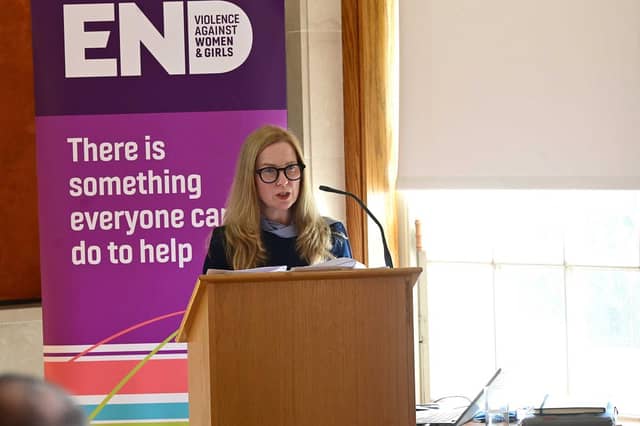

New research from Queen’s University Belfast examines how young men and boys in Northern Ireland (NI) understand masculinities, violence against women and girls, and their role in preventing it.
Commissioned by The Executive Office's Ending Violence Against Women and Girls (EVAWG) Directorate, the study provides important new evidence on the beliefs and attitudes of boys and young men aged 16 to 24.
The study was conducted by a team of researchers from the School of Nursing & Midwifery and the School of Social Sciences, Education and Social Work at Queen’s.
The research found that most young men reject physical violence against women and girls and describe masculinity in positive terms, including respect, responsibility and caring for others:
- 80% of young men and boys surveyed rejected views on masculinities that reinforce power imbalances with women.
- Fewer than 1 in 10 agreed men should have more power than women in marriage.
However, alongside these positive views on masculinities, the data also shows that some young men in NI hold views that uphold expectations of male toughness, expectations of financial dominance in relationships with women, and prejudice towards gay men:
- 1 in 2 young men felt men should always act strong even when scared or nervous.
- 1 in 3 agreed men should be the primary financial provider for the family.
- Fewer than 1 in 10 agreed men should have the final say in decision-making.
- 1 in 5 agreed a gay man was not ‘a real man’.
Violence against women and girls was broadly condemned by young men, reflected in near-universal rejection of physical violence and consistent support for women’s sexual autonomy:
- Fewer than 1 in 20 thought a man had good reason to hit his wife.
- Endorsement of violence and rejection of women’s sexual autonomy was rare (fewer than 5%).
The study also highlights the need for greater understanding of non-physical forms of violence, including coercive control, emotional abuse and harassment, which were often less readily recognised as forms of violence against women and girls.
Commenting on the importance of the research, Professor Maria Lohan from the School of Nursing & Midwifery at Queen's University Belfast, said:
“This research is grounded in listening to boys and young men themselves. Drawing on focus groups and a survey with young men aged 16–24, interviews with youth workers and coaches across NI, and our earlier research with boys aged 14–16 in schools, we heard a clear message: boys and young men concluded for themselves that they need, and want, to learn more about ending violence against women and girls, particularly its less visible forms, such as coercive control.
“Our task now is to meet that appetite by equipping schools, youth services and the trusted adults around young people to have these conversations. We thank the young people and practitioners who took part.”
In addition, the research shows that masculinities in NI are diverse but remain shaped by the legacy of the Conflict. This can mean respect for toughness, control, and male authority remains strong in politics, communities, and institutions, and can influence how some men and boys, particularly those in communities most affected by the conflict, understand masculinities and their role within society.
However, young men and boys recognised that men have a role in preventing violence. To them, this included respecting women and girls, challenging harmful behaviour among peers and modelling positive attitudes.
The research will support government and wider efforts to engage men and boys in ending violence against women and girls. A youth-friendly version of the report, co-designed by the young people’s advisory group and researchers, will be used in schools and youth settings to help empower young men to be part of the solution.