

Punk turns 50 - but local fans are happy to grow old disgracefully!
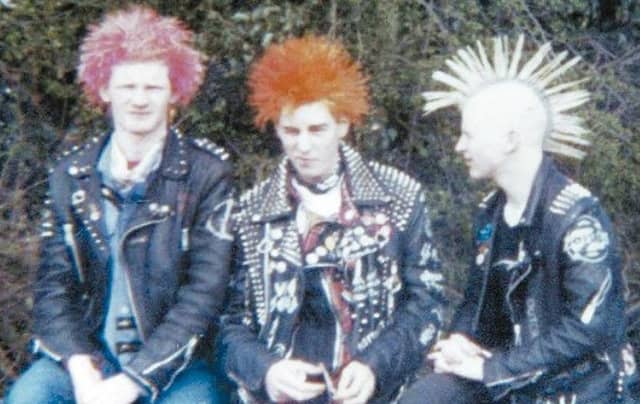

SO punk has turned 50, but the defiant spirit of ‘76 is still very much alive. In rude health, of course.
It was a sweltering summer, and as Ulster fried disaffected youth began to rebel against the music that was foisted upon them, by making their own.
Middle of the road acts like The Brotherhood of Man, Elton John and Kiki Dee and ABBA were simply not cutting it for them any more. To them, the Fonz was not the epitome of cool.
Rock had lost its provocative edge, its danger, and, with it, much of its youth appeal.
All of that, however, was about to change as, slowly but surely, bands like the Sex Pistols snarled into the public consciousness. Staggering along a path to notoriety paved with simplistic, contagious power chords - and plenty of obscenity and bile - they leapt intentionally from controversy to controversy.
And the more the media voiced their distaste for the smirking, pill popping, glue sniffing punks, the more exciting and vital they became.
The ethos was very much one of do it yourself. Got a guitar that you don’t know how to play properly? Don’t let that keep you from joining a band and getting on stage. Can’t sing? You can slur, sneer and spit though, so you’re the lead singer. Can’t find a record label to release your single? Find a way to get it pressed yourself.
After all, punk was never really about the music. It was the noise, the camaraderie, the adrenalin - the pure, non-conformist buzz of being a teenager screaming at a society that had lost the ability to shape you.
In Northern Ireland, such sentiments were amplified out of a desire to be to be heard over the onslaught of violence that gripped the country in the 1970s. Punk arrived on these shores amidst turbulent times, so it was only natural that the genre and accompanying lifestyle secured such a fanatical local following.
The first Northern Ireland band to really break through were Rudi, who had formed in late 1975.
Their anthem was ‘Big Time’ - and it was recorded in Templepatrick in a studio that belonged to the Solomon Peres organisation. It was the band's first time in such a place, and the song was recorded live in an ‘intense rush’.
It eventually reached the ear of Terri Hooley, who decided there and then to release it on his Good Vibrations label.
If you ventured along Great Victoria Street in those uncertain days, you’d eventually be greeted with a life-sized wooden cutout of Elvis Presley. To climb the staircase the King gestured to was to bear witness to the changing of the musical guard - and the genesis of an Alternative Ulster.
It was the headquarters of impresario Hooley’s ‘Good Vibrations’ enterprise. On the one hand, it was a record shop, stocking all the latest punk and New Wave music and fanzines. On the other, it was an independent record label lending a voice to Northern Irish talent like such as Rudi, the Outcasts and the Undertones.
“I can remember getting chased down the stairs by Terri because I was nicking gig posters from the wall,” recalled Antrim man and punk archivist Sean O’Neill.
“I always tried to take my time so as not to rip the posters on the staples, so this increased the risk of being spotted.”
Back in 2003, O’Neill - stripped of his spikes and safety pins by the passage of time, but not of his loyalty to the movement that shaped his formative years - struck success alongside fellow Antrim man Guy Trelford with the publication of their retrospective punk history, entitled ‘It Makes You Want To Spit’.
Painstakingly documenting the local punk and New Wave scene of the late 1970s and early 1980s, the book was an instant critical success following its launch at Queen’s University’s Belfast Festival.
Over the course of the book, O’Neill and Trelford convincingly portray how there was more to Northern Irish punk than the Undertone’s timeless classic ‘Teenage Kicks’, thrusting the spotlight on lesser known but no less authentic ensembles such as Dogmatic Element, Moral Support and Dick Tracy & The Green Disaster.
It also boasted an impressive array of input from celebrities who recalled that exciting time, including writer Colin Bateman, Ulster DJs Stuart Bailie and Johnny Hero, the late John Peel of the BBC, and Joe Strummer of the Clash.
For many, the wealth of photographs - lovingly compiled over a five-year period - featured within the pages of the book were particularly evocative, capturing for posterity that fleeting moment when hair was exotic, colours were no longer optional, and trousers were bondage. And, incredibly, Antrim was at the eye of the storm.
“Punk in Antrim certainly drew people together, cutting across divisions of class and religion, creating a very real sense of camaraderie,” explained Sean.
“It really did feel like it was us against the world!
“Punk certainly inspired us to question everything, think for ourselves and go out and do our own thing. Antrim had several bands back then too and many lasting friendships were forged.
“Because the look was very different, I’m often asked if it was about the music or the attitude. Well, for me it was the whole package - the look, the attitude, the music, and what is often overlooked, the fun and excitement of it all!
“Like a lot of people, the Sex Pistols kick started it all for me. Locally, bands such as the Outcasts, Rudi, and the Defects were great live bands and leading lights on the local scene.”
As their interest grew, the Antrim punks began to devote more energy to perfecting the distinctive punk look. A double take from a shocked parent was often a good indication that they were on the right lines.
“Gear was mostly obtained via small mail order companies who regularly advertised in music papers such as the NME, Sounds and Melody Maker,” said Sean.
“There were also a few outlets in Belfast later on, such as Image, which we frequented.
“Much later on, Ronnie Miller’s Pop-In record shop in Antrim also took to stocking some T shirts and bondage trousers.
“Hair-wise, soap was used. As was egg white. Both obtained the desired effect when combined with standing on your head under a good hairdryer.”
Once dressed, it was time to hit the town, and one of their favourite haunts was the Castle Grounds - which was the scene of many a rowdy party. There were also road trips all over Ireland and the UK to gigs and gatherings.
However, even though the movement continued to burn brightly into the early 1980s, the ranks of the Antrim punks began to thin. Little by little, perhaps inevitably, the music and swagger began to fade.
Many of the players got jobs, settled down, had families of their own. Punk had come of age - a dangerous development in a scene which was always a young man’s game.
Nonetheless, Sean kept the faith, his interest weathering a number of crude late 1980s literary efforts to dissect and explain what the movement had been about.
“At the time I was sick and tired of reading books that seemed to think punk began and ended with a small clique of fashionistas in London and once us oiks from elsewhere discovered it then it was all over.
“To paraphrase the Pistols, what a load of b*llocks!”
This indignation was channeled into his book - and once he and Guy completed the project, it became apparent that reports of the demise of punk had been grossly exaggerated.
The reaction was ‘instant and overwhelming’ and local punk fans were galvanised in a way they hadn’t been for years. They loved it, but soon they wanted more.
It eventually evolved into an award winning website - www.spitrecords.co.uk - which, as the name suggests, is also the home of a label devoted to uncovering rare and unreleased recordings others simply can’t reach.
“The Spit book took some five years to complete but I’m still collecting and updating band bios etc on the website,” said Sean.
“It never stops!
“In many respects, the label is a companion to the book and website.
“I’m always keen for people to get in touch if they have any old photographs or information - and, in turn, there are hundreds of fantastic images on there.
“The premise of the label is to issue previously unreleased material by Northern Ireland punk and New Wave bands from the late 70s early 80s.”
At present, Sean’s label has accrued and released albums from an impressive roster of artists. The Outcasts, the Androids, White Noise, the Co-Ordinates, Shock Treatment and Rudi are among the groups that today comprise the Spit Records stable.
“People who were around at the time,” he adds, “will appreciate what a big deal that is.”
In recent years, punk has enjoyed something of a resurgence as interest in the era, music and subculture regains momentum.
In 2013, the exploits of Belfast punk godfather Terri Hooley were celebrated in the acclaimed feature length film ‘Good Vibrations,’ starring future ‘Game of Thrones’ and ‘Blue Lights’ actor Richard Dormer as the irrepressible Hooley, and Jodie Whittaker of eventual ‘Broadchurch’ and ‘Doctor Who’ fame as his wife Ruth.
One key scene recreated the famous Ulster Hall gig that brought many of the local scenes brightest lights together for one triumphant night. And, yes, there were many Antrim punks acting as extras in the crowd.
Having attended the premiere of the film, Sean recalls that ‘there were lots of ‘Good Vibes’ in the Ulster Hall that night’.
“The film was surprisingly upbeat and hilariously funny with a great attention to detail. I’ve no doubt it will travel well and stand the test of time. After all, history never goes out of date!
“The only ghosts from the past that I observed were contained in the images of actual punks from the time used in conjunction with the closing credits.
“These featured quite a few Antrim punks - some of whom are sadly no longer with us.”
The scene has continued to thrive, with a whole new generation of fans joining the veteran punks at an annual gig at Custom House Square in Belfast - with none other than a certain Terri Hooley on the decks.
And things came full circle when Pistols front man John Lydon played his first ever open air gig in Northern Ireland last August.
And proof positive that the distinctive spirit of Ulster punk was still very much alive, he got more than he expected when he goaded the baying crowd to send him a message.
He left the stage, laughing, to a loud chant of ‘you fat bas**rd’!
Be careful what you ask for...