

Martin McLoone was a true educator in the broadest sense
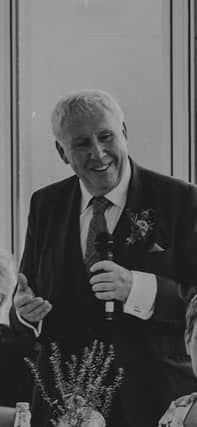

Former teaching colleague recalls a 'warm, witty and engaging companion'
Prof. Martin McLoone July 12 1950- October 3 2023
TRIBUTES have been paid to pioneering lecturer Martin McLoone who sadly passed away earlier this month.
A former senior lecturer in Media Studies at Ulster University in Coleraine, the Derry native has been described as an ‘inspiring teacher’ who enthused generations of students with his deep knowledge of his subject.
Born and raised in Derry’s Creggan estate in 1950, Martin was educated at St Columb’s College in his native city before leaving home to study English at University College, Dublin.
He relocated to London in the 1970s where he became a secondary school teacher, before returning to Dublin take up the post of Education Officer at the Irish Film Institute.
Finally, in 1986, he accepted a lecturing position within the Media Studies department at Ulster University where he remained until retiring as Head of School in 2014.
One of those who knew him best, both in a professional and personal capacity, was his erstwhile colleague at Coleraine, John Hill.
Formerly Professor of Media Studies at Ulster University but now Professor of Media, Royal Holloway, University of London, John recalled four decades of friendship between the pair.
SERVICE
“Martin was my friend for over 40 years and my colleague at the University of Ulster for 20. He was a great person to have as a friend,” John told mourners at a Service of Celebration at Wade’s Funeral Home in Coleraine on Friday October 6.
“As anyone who knew him will testify, he was a warm, witty and engaging companion who was always full of ideas and opinions. Over the years we spent a lot of time supporting local restaurants (particularly a succession of curry houses in Coleraine, Derry and Portstewart).
“Meeting up with Martin was like being given a free education and I would look forward to hearing what he had to say about the latest films and music, political developments and sport.
“ I was probably less passionate than he was about soccer but I soon became a de facto supporter of Derry City and Tottenham Hotspur and learnt to speak confidently about playing styles, team tactics and managerial changes on the basis of what Martin had explained to me.”
And it was this unique commitment to education - and educating - that came to define Martin McLoone’s life.
“Martin was a true educator in the broadest sense,” continued John Hill.
“He left school in Derry to study English at University College, Dublin, before moving to London in the 1970s where he became a secondary school teacher.
“That was where I first met him although, at this point, he was about to change job and move back to Dublin to take up the post of Education Officer at the Irish Film Institute.
“This was a pioneering role encouraging the introduction of film and media education in schools and Irish cultural life more generally. Through the organisation of events and summer schools (such as those at Clongowes Wood College in Co. Kildare), he not only paved the way for the addition of media studies to the Irish school curriculum but influenced a whole generation of Irish teacher.
“His organisation of events with the national broadcaster RTÉ also led to the groundbreaking collection of essays, ‘Television and Irish Society (1984),’ which was not only the first serious book on the topic but also an enduring influence on media scholars. Martin’s own essay on the RTÉ series, Strumpet City, also signalled his growing interest in Irish television drama, along with contemporary Irish film and popular music.”
The pair were to cross paths again in later years when Martin worked alongside his great friend in the Media Studies department at Ulster University’s Coleraine campus.
“Here he proved to be an inspiring teacher who enthused generations of students with his deep knowledge of his subject, his clarity of communication and his relaxed and open manner,” recalled John.
“He was also an inspiration to a number of postgraduate students who have since gone on to hold a range of positions in universities, north and south, and carry on his commitment to media education in Ireland.
“It was also at Ulster University that Martin flourished as a writer. Martin did, of course, possess an English degree and his writing was notable for the clarity and lightness of touch that made his books and essays so much more engaging and accessible than the average academic work.
“Arguably, his best work was Irish Film (2000), his lucid and insightful overview and assessment of contemporary Irish cinema. This remains a core text when teaching about Irish film and has become a standard point of reference for all subsequent writers on the subject.
“His other works include a stimulating collection of essays on Film, Media and Popular Culture In Ireland (2008), a co-authored book on Rock and Popular Music in Ireland (2012), which inspired a BBC documentary, and a number of edited or co-edited collections dealing with film, television and cultural identity.
“These works reveal the wide range of his interests, along with a capacity to address a multiplicity of topics - from Van Morrison and punk music to The Quiet Man and public information adverts – in a fresh and engaging manner.”
Clearly a much valued and respected academic, Martin McLoone’s upbringing in Derry ensured that he never forgot his roots.
“As well as a distinguished teacher and writer, Martin was also a team player, with a strong belief in the virtues of collaboration,” his friend explained.
“He was committed to supporting, and working with, his colleagues and to taking on leadership roles. He became the first Head of School of the newly-formed School of Media and Performing Arts when he helped to develop the postgraduate course in journalism.
“He also played a key role in the Centre for Media Research and, through his writings and activities, helped to establish the Media Studies department as a leading location for teaching and research.
“This, in turn, was recognised by the university where he was awarded a doctorate for his writings and appointed to a Professorship. His activities were not, however, confined to the university and he was keen to share and discuss ideas more generally through public engagements, magazine writing and contributions to cultural bodies.
ACTIVE
“He was, for example, a co-founder and Board member of the very first Foyle Film Festival in 1987, served on the jury of the Celtic Film Festival in Gweedore and was an active member of the Media Group of the Cultural Traditions Group, organising an influential symposium on culture and identity that brought together both broadcasters and scholars.”
Despite his many accomplishments in the fields of academia and literature, however, some of Martin’s greatest achievements came closer to home according to his long time friend.
“When I first met Martin, he was, of course, a relatively young man dedicated to both his work and the pursuit of his cultural and sporting enthusiasms,” said John.
“Martin grew up in a warm, close-knit family and, once he fell in love with and married Cindy, they created a family of their own.
“Although Martin was extremely modest and never boasted about his own achievements, he was immensely proud of his children, Katie, Maeve and Grainne, and was rightly happy to tell you of their many accomplishments.
“ In all aspects of his life - as a family man, friend and educator - Martin revealed the same characteristics of kindness, empathy, intelligence, generosity of spirit and commitment to fairness and justice.
“I feel that a part of myself has gone with him, and all who knew him - especially his loving family - will feel an immense sense of loss.”
Martin McLoone was laid to rest following a service of commital in Portstewart Cemetery.
He was the dearly loved husband of Cindy, loving father of Katie, Maeve and Grainne, father-in-law of Lee and Ryan and much loved granda of Gretta; dear son of Gretta and the late John and brother of Peter, Billy, Noel, Patrick, Marian, Margaret, Gerard, David and Claire.