

From Ballykelly to Kilkea...
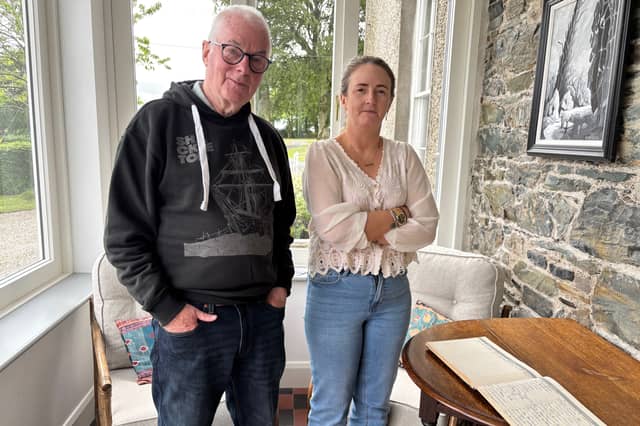

Local residents enjoyed a trip to the birthplace of Sir Ernest Shackleton
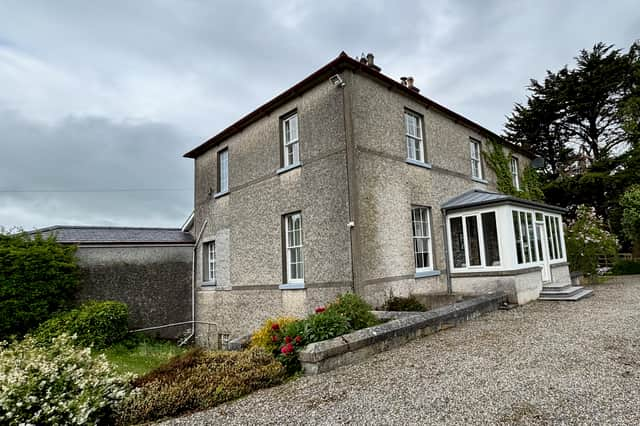
MEMBERS of the Shackleton Aviation Museum journeyed down to the birthplace of Sir Ernest Henry Shackleton in Kilkea, County Kildare.
The name will ring familiar to many, with the barracks in Ballykelly named after the explorer.
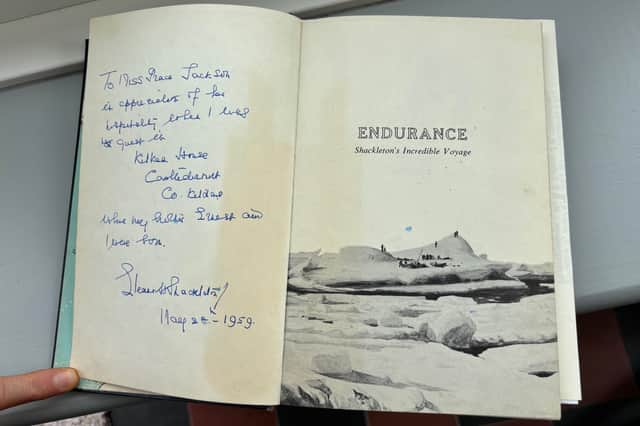
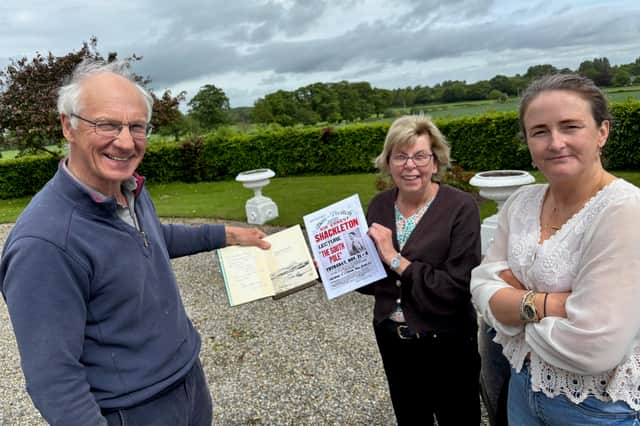
He is also named after the Avro Shackleton, a British long-range maritime patrol aircraft (MPA) which was used by the Royal Air Force (RAF) and the South African Air Force (SAAF).
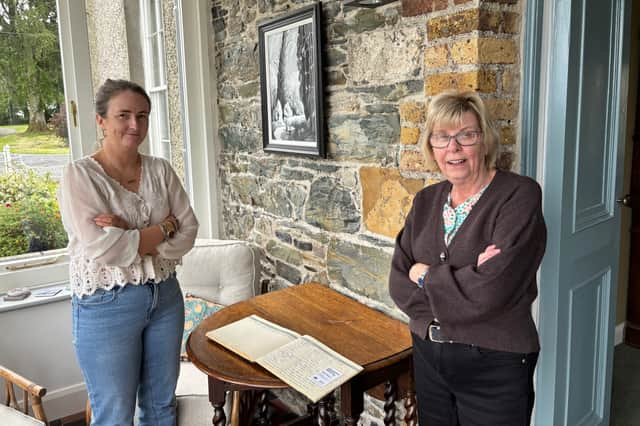
Curator Norman Thorpe was joined by Sylvia Thorpe and Helen Peoples, who visited the historic house, and had the opportunity to sign a visitors book in August.
The trip provided an opportunity to highlight the pioneering work of Shackleton, who led a trail-blazing life through the late 19th and early 20th centuries.
The Shackleton family are of English origin, specifically from West Yorkshire, where Ernest’s father was descended from Abraham Shackleton, an English Quaker who moved to Ireland in 1726 and started a school in Ballitore, Co. Kildare.
Born in Kilkea in 1847, six-year-old Ernest moved to Dublin with his mother, father and nine siblings, before moving on to Sydenham, London.
At just age 20, he sailed from Liverpool to the Cape Horn in 1894, and at 24 qualified as a master to command a British ship.
Between 1899-1900, Shackleton served troops taking young soldiers to the Boer War, and just a year later travelled to the South Pole with Robert Falcon Scott - he returned home in 1902 due to illness.
Shackleton would continue to return to the South Pole on future expeditions, including on a nimrod between 1908-09, reaching within 112 miles and ascending Mount Erebus for the first time.
That same year he crossed the trans-antarctic mountain range for the first time and helped with the discovery of the Beardmore Glacier.
One of his latter expeditions in 1916 was to South Georgia, an island in the south Atlantic Ocean.
Shackleton took five men on the James Caird - John Vincent, Timothy McCarthy, Thomas Crean, Harry McNish and Frank Worsley - across an 800-mile journey.
The cliffs of South Georgia came into sight on 8 May, but hurricane-force winds prevented any possibility of landing.
They managed to land days after, and shortly after began to attempt a land crossing of the island to reach the whaling station on 20 May.
On 23 May all sailors set off for Elephant Island, and ended up remaining stranded for four and a half months.
After evacuating, the crew were welcomed to Chile.
On 5 January 1922, in the early hours of the morning, Sir Ernest Shackleton died of a suspected heart attack. His body was buried in South Georgia in the Grytviken Cemetery.